If you've been searching "liposuction cost," "vaser lipo nj," "coolsculpting vs liposuction," or just "how does lipo work" — you've probably noticed the internet is split between glossy before-and-afters and terrifying warnings. The truth sits somewhere in between, and you deserve the middle: the honest, useful version.
This guide covers what liposuction actually is (and is not), the candidates who get the best results, every major technique — tumescent, VASER/ultrasound, laser (SmartLipo) and power-assisted — what the procedure feels like, the real results timeline, the risks that matter, and what to expect to pay in New York and New Jersey. For pricing specifics, jump to our liposuction cost guide; for the full healing arc, read what to expect during liposuction recovery.
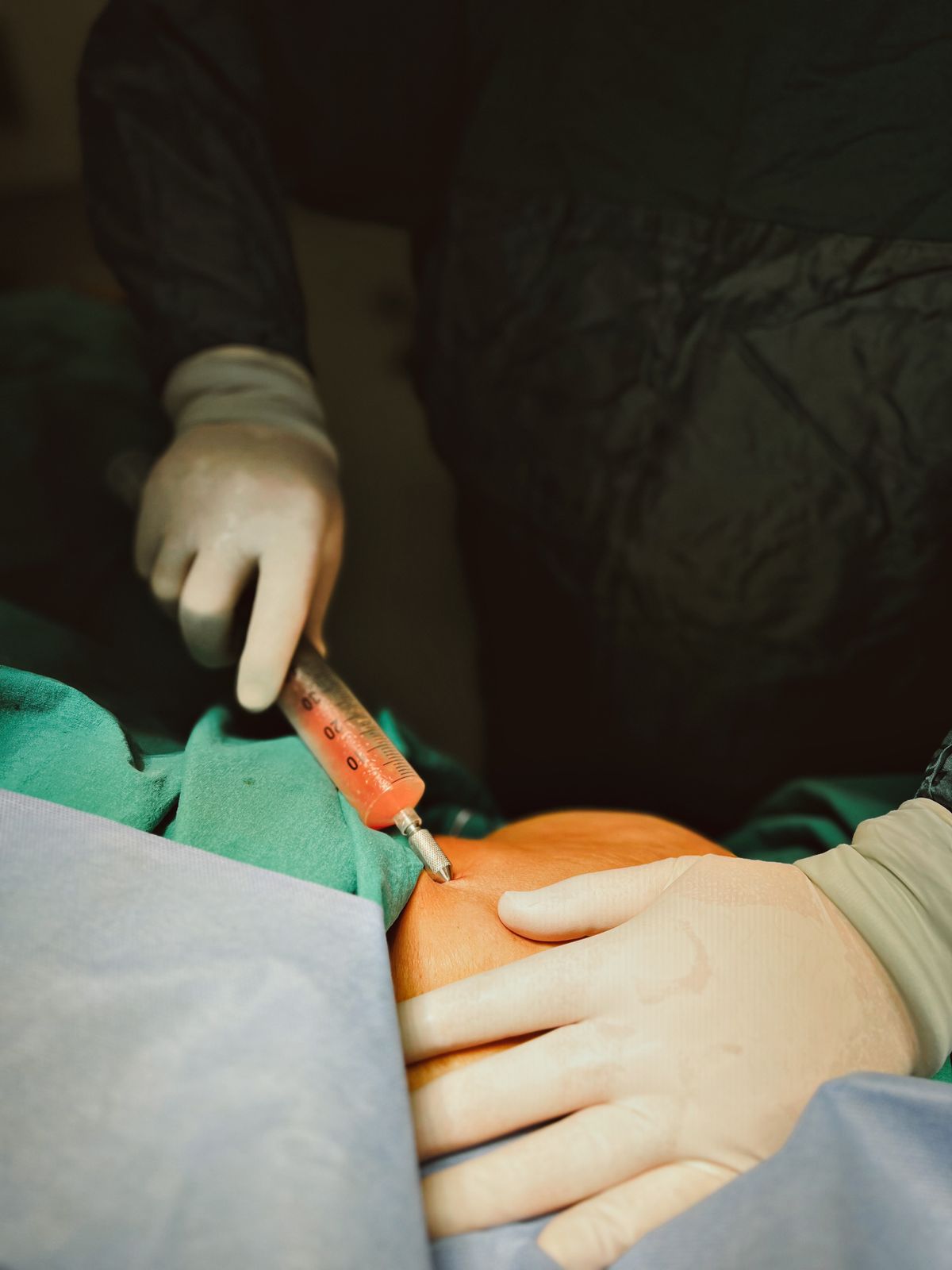
1. What Is Liposuction (and What It Is Not)
Liposuction — officially lipoplasty, or "suction-assisted lipectomy" — is a body-contouring procedure that removes localized fat deposits through small incisions using a thin tube called a cannula. The American Society of Plastic Surgeons (ASPS) tracks roughly 349,000 liposuctions per year in the United States as of 2024, making it consistently one of the top five cosmetic surgeries performed.
Here is the part every patient needs to hear early: liposuction is not weight loss surgery. It does not remove excess skin, it does not tighten loose muscle, and it is not a treatment for obesity. Liposuction reshapes. The American Board of Cosmetic Surgery uses the analogy of a sculptor removing stone from a block — the fat that comes out is gone forever (adult fat cells don't regenerate), but the *shape* you see afterward depends on the skin and muscle underneath.
That single distinction explains most disappointing outcomes: someone expecting a six-pack from lipo walks away thinking surgery failed, when actually the muscle definition was never on the table.
2. Am I a Good Candidate for Liposuction?
Patients who get the most satisfying results share a few consistent traits:
- Close to a stable, healthy weight — within roughly 20–30 pounds of your goal, with weight that hasn't yo-yoed.
- Stubborn fat in specific areas that resists diet and exercise — the love handles, lower abdomen, inner/outer thighs, arms, back rolls or bra-line bulge.
- Good skin elasticity — younger or well-cared-for skin shrinks down over the new contour. Loose, sun-damaged skin may need removal (that's where a tummy tuck, thigh lift or arm lift comes in).
- Overall good health — no uncontrolled diabetes, heart disease or clotting disorders; a non-smoker (smoking sharply raises complication risk).
- Realistic expectations — you understand lipo improves contour, not weight on a scale.
Liposuction is not recommended for patients who are significantly overweight, have serious medical conditions, or who see lipo as a shortcut to large-scale weight loss. Many responsible New York and NJ surgeons will decline large-volume liposuction (>5 liters) because the safety risk climbs steeply.
3. The Consultation: What Your Surgeon Will Evaluate
A good consultation is part physical exam, part conversation. The surgeon should:
- Assess fat and skin quality. They'll pinch, feel and look at your skin tone in each target area to predict how well it will redrape.
- Plan treatment zones and mark them on your body.
- Weigh you and review BMI to make sure the plan is safe and honest.
- Discuss anesthesia — local/tumescent-only ("awake lipo") vs deeper sedation or general ("asleep lipo").
- Show you the specific technique they'd recommend and why, and their actual before-and-after gallery.
- Walk you through recovery — compression, swelling, drain concerns and timeline (see our recovery guide).
Bring questions. Ask how many liposuctions they perform a year, whether they're board-certified in plastic surgery (ASPS member surgeons are a strong signal), and what their complication rate looks like. In an area with doctors on every corner — Manhattan, Long Island, Bergen County, Newark, Edison — credentials separate the craft from the assembly line.
4. Liposuction Techniques Compared
Modern lipo isn't one surgery; it's a family of techniques. The table below is the plain-English version.
| Technique | How it works | Best for | Notes |
|---|---|---|---|
| Tumescent liposuction | Large volume of saline + lidocaine + epinephrine injected first; fat suctioned with a manual or powered cannula | The safety gold standard; nearly all lipo uses this fluid | Less bleeding and bruising; the term most often just means "standard lipo" |
| VASER (ultrasound-assisted) | Ultrasound energy liquefies fat before suction | Fibrous areas (back, male chest, flanks); can feel smoother | VASER lipo in NJ and NY is widely marketed; slightly higher learning curve per-surgeon |
| SmartLipo (laser-assisted) | Laser fiber melts fat and is claimed to stimulate collagen/skin tightening | Small areas, skin-tightening emphasis | Results depend heavily on technique; can mean longer procedure time |
| Power-assisted (PAL) | Motorized vibrating cannula helps the surgeon break up fat | Large or dense volumes; less surgeon fatigue | Often what "high-definition lipo" builds on |
| High-definition / 360° lipo | Aggressive sculpting with defined "etching" of muscle planes | Fit patients wanting visible abs/flanks/back definition | More bruising, longer recovery; skin quality must be excellent |
Most experienced NY/NJ surgeons use tumescent fluid as the foundation for every case and then layer in a energy-assist device (VASER or laser) where it helps. The device matters less than the surgeon's hands — a great result from tumescent-only lipo routinely beats a mediocre VASER result.
5. Awake vs Asleep: Anesthesia Options
Anesthesia is a genuinely split conversation, and it changes your cost and recovery:
- Awake (local tumescent): The numbing fluid keeps you comfortable; you stay alert. Common for smaller areas. Cheaper, no nausea, faster "put-together" times. Not ideal for large-volume or highly sensitive spots.
- Twilight/sedation: You're relaxed but breathing on your own. Comfortable middle ground for medium cases.
- General ("asleep"): A board-certified anesthesiologist fully manages your airway. Standard for large-volume, multi-area or combined cases like a mommy makeover. Safer for some medical profiles; adds anesthesia fees.
Ask flat-out: "Who will be in charge of my breathing, and what happens if I'm not tolerating the sedation?" The credential of the anesthesia provider is a safety question, not a cost question.
6. What Happens During Liposuction, Step by Step
- Marking: You're marked standing upright so natural contours guide the plan.
- Anesthesia per your agreed plan.
- Tumescent infusion: Sterile fluid is injected — this is the safest part of the procedure, not the scrape.
- Cannula work: Through tiny incisions (2–5 mm), the surgeon breaks up and removes fat in layers, feathering edges so you don't get "lipo dents."
- Closure: Incisions are closed, often with just steri-strips or dissolvable sutures.
- Compression: A surgical compression garment is applied before you wake.
Outpatient cases take 1–3 hours depending on areas. Bigger cases (abdomen + flanks + thighs) can run longer, especially under general anesthesia in an accredited facility.
7. Results: When Will You See the Difference?
- Days 1–7: You're swollen and sore; the garment is your best friend. What you see is NOT the result.
- Weeks 2–4: Swelling drops noticeably. You can see shaping begin, but fluid shifts can make things lumpy day to day.
- Weeks 6–8: A solid preview of the outcome as most swelling resolves.
- 3–6 months: The true, final contour. This is the "3–6 months" number you see everywhere — it's real.
Weight stability matters after surgery. If you gain 10 pounds later, it distributes to untreated areas and remaining fat cells — the contour you paid for softens. Maintenance isn't optional; it's part of the investment.
8. Liposuction vs CoolSculpting: Which One Deserves Your Money?
Non-invasive fat reduction like CoolSculpting (cryolipolysis), BodyTite, SculpSure and EmSculpt is hugely popular precisely because there's no scalpel and almost no downtime. The honest comparison:
- CoolSculpting: Freezes and kills fat cells; the body flushes them over 2–4 months. Typical visible reduction is modest — often 20–30% of the fat layer — and results vary by patient. Multiple sessions and retreatment are common. No anesthetic, no incisions, easy to do over lunch.
- Liposuction: Removes the fat surgically, in one session, with 50–80%+ of the fat layer gone immediately (shape refines over months). Bigger change, bigger price, real recovery.
The rule of thumb: if you want noticeable, reproducible sculpting of a stubborn area, liposuction wins. If you want a gentle touch with no downtime and are fine seeing a partial result, non-invasive is a legitimate first step — just don't expect lipo-level change. Cellulite and skin laxity are separate issues neither technique truly cures.
9. Risks of Liposuction and How to Avoid Them
Liposuction is one of the safer cosmetic procedures in expert hands, but it's still surgery. The risks that matter most:
- Contour irregularities — ripples, dents, waviness (the most common complaint). Minimized by feathering technique, good skin quality and honest patient selection.
- Seroma — a pocket of fluid under the skin. Usually drains with a small needle in the office; risk drops when compression is worn faithfully.
- Numbness and skin changes — temporary; can persist for months.
- Infection, bleeding, scarring — rare, managed with proper technique and aftercare.
- Fat embolism — the rare but serious complication where fat enters the bloodstream; it's why large-volume lipo and too-aggressive suction are avoided by safe surgeons.
- Anesthesia complications — real but rare when a qualified provider manages you.
You can cut your personal risk dramatically: choose a board-certified plastic surgeon, tell them your complete medical history, stop smoking 4+ weeks out, follow compression rules, and don't combine too many aggressive procedures.
10. Cost and Next Steps
Nationally, liposuction averages $4,000–$7,000 for a single area (surgeon fee only) and $3,000–$9,000 depending on region, technique and facility. In NYC and NJ, per-area pricing tends to run the higher end of that range, and multi-area 360° cases climb well past $10,000–$15,000. We break every fee component down in our dedicated liposuction cost guide for New York & New Jersey.
Liposuction often pairs with other contouring work — tummy tuck, mommy makeover, Brazilian butt lift, arm lift or thigh lift — and combining procedures usually lowers the total bill per procedure while adding one recovery. Explore those guides and all body surgery options, then use our full blog library to compare before you spend a dollar.
FAQ — Quick Answers
Is liposuction good for weight loss? No. Liposuction is body contouring, not weight loss. Best results go to patients close to a stable healthy weight; large-volume fat removal is risky.
How long until I see liposuction results? You'll notice real change by 6 weeks as swelling drops, but the final contour settles at 3–6 months — that timeline is baked into every honest surgeon's plan.
Is VASER lipo better than traditional liposuction? VASER adds ultrasound energy that some surgeons use to refine fibrous areas and aid skin tightening. It's a tool, not a magic wand — the surgeon's technique decides the outcome.
What is the difference between CoolSculpting and liposuction? CoolSculpting freezes fat cells for a modest, gradual (2–4 month) reduction with zero downtime. Liposuction removes the fat surgically for immediate, substantial change. Lipo wins on outcome; CoolSculpting wins on convenience.
Where do liposuction scars go? Incisions are tiny (2–5 mm) and hidden in creases or natural shadows of the treated area. They fade to small marks over 6–12 months.