You typed "botox cost new york," "botox vs dysport vs xeomin," or "botox for forehead nj" into the search bar — and you landed here. Good instinct. Botox and its cousins Dysport and Xeomin are the most popular cosmetic treatments in America (the American Society of Plastic Surgeons counts them in the millions of procedures every year), yet most of what you'll find online is either marketing fluff or pricing from a single clinic.
This guide walks you through the honest, useful version: what each product is, how the toxin actually relaxes a wrinkle, unit-by-unit dosing for the three common treatment areas, a real Botox vs Dysport vs Xeomin comparison table, results timelines, risks, and what you should realistically pay in Manhattan, Brooklyn, Long Island and across New Jersey.
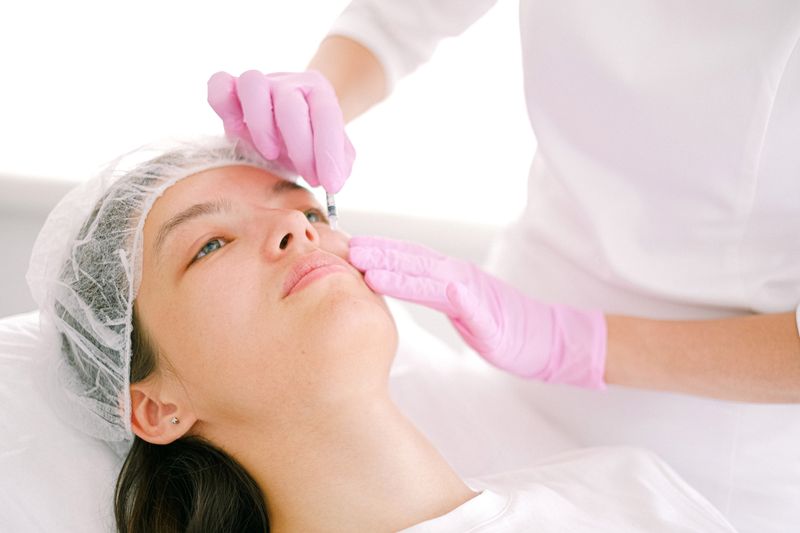
1. What Are Botox, Dysport and Xeomin?
All three are botulinum toxin type A — a purified protein that, injected in tiny measured doses, temporarily relaxes specific facial muscles. "Botox" has become the generic word for the whole category, the way people say "Kleenex" for tissues, but technically Botox is just one brand. The others are Dysport and Xeomin, and for the vast majority of patients the three are close cousins rather than rivals.
- Botox (onabotulinumtoxinA) — the original, FDA-approved since 2002 for cosmetic use, made by AbbVie. The most studied product in the category, which is why most injectors quote prices "per unit of Botox."
- Dysport (abobotulinumtoxinA) — a slightly different molecule that tends to show results about a day sooner and spreads a touch more easily across a broad area like the forehead.
- Xeomin (incobotulinumtoxinA) — nicknamed the "naked" or "pure" neuromodulator because it is formulated without the protective complexing proteins found in the other two; more on why that matters below.
2. How Neuromodulators Actually Work
Frown lines, forehead creases and crow's feet form when you make the same facial expressions thousands of times — the muscles underneath crease like a repeatedly folded sheet of paper. Botulinum toxin works by blocking release of acetylcholine, the chemical signal your nerves send to tell a muscle to contract. With the signal cut off, the muscle relaxes, the skin above it smooths out, and the wrinkle softens.
Nothing is "frozen," despite the myth. A skilled injector dosed conservatively leaves your face fully expressive — animated frowning just doesn't produce the deep crease it used to. And the effect is not permanent: your body gradually grows new nerve endings, the signal resumes, and muscle movement (and the wrinkle) returns over 3–6 months. That's why maintenance visits are the norm.
3. Botox vs Dysport vs Xeomin: Head-to-Head
The differences matter mainly at the margins, but here is the honest comparison table you came for:
| Brand | Active ingredient | Onset | Typical duration | Standout feature |
|---|---|---|---|---|
| Botox | OnabotulinumtoxinA | 3–7 days | 3–4 months | Most studied; the "gold standard" and pricing benchmark |
| Dysport | AbobotulinumtoxinA | 2–5 days | 3–4 months | Often slightly faster onset; spreads well over broad areas like the forehead |
| Xeomin | IncobotulinumtoxinA | 3–7 days | 3–4 months | "Pure" formulation, no complexing proteins; niche resistance concern |
4. Treatment Areas and Typical Unit Dosing
People usually treat three zones, alone or in combination. Typical Botox-brand starting doses look like this:
| Area | Wrinkle | Typical Botox units | Typical price (NY/NJ) |
|---|---|---|---|
| Forehead | Horizontal frontalis lines | 15–25 units | $300–$450 |
| Glabella ("11s") | Vertical frown lines between brows | 15–25 units | $300–$450 |
| Crow's feet | Periorbital lines at eye corners | 10–15 units per side | $250–$400 per side pair |
A two- or three-area combination (the "forehead + 11s + crow's feet" package most offices advertise) typically lands at $600–$1,200 in the New York metro. Less common areas — a brow lift, lip flip, masseter slimming, or under-arm sweating — are quoted differently because muscle sizes differ.
5. Are You a Good Candidate?
- Healthy adults 18+ with dynamic wrinkles — lines that show when you move your face.
- People bothered by forehead creases, "11s," crow's feet, or a heavy-turning-down mouth corner (DAO — the "marionette" lines).
- Patients with realistic expectations: subtle smoothing, not an expressionless mask and not instant and permanent.
- Candidates also include chronic migraine, and TMJ/grinding patients — but those are medical uses with different dosing.
Not for you (without a doctor's OK): pregnancy or breastfeeding, active infection at the injection site, a known allergy to botulinum toxin or cow's milk protein (relevant for Xeomin), and certain neuromuscular conditions like myasthenia gravis or ALS. Your consultation must cover these.
6. Your Consultation
A proper consultation — even a ten-minute one — should do four things: assess you at rest and while animating your face, map the exact injection points, recommend a unit count and total price in writing, and review your medical history. If an injector quotes only "per area" and refuses to say how many units, that's a yellow flag: you should know what you're buying.
In New York and New Jersey, cosmetic injections are performed by physicians, physician assistants and nurse practitioners (and in some states, registered nurses under physician supervision). Asking "who will actually inject me and what are their credentials?" is completely reasonable — and a board-certified injector (dermatology or plastic surgery) is the strongest safety signal there is.
7. The Treatment, Step by Step
- Prep. You'll arrive with a clean, makeup-free face. Skip alcohol and blood-thinners (including ibuprofen, vitamin E and fish oil) for a few days beforehand to cut bruising; your injector will give you a precise list.
- Mapping. The injector marks injection points while you raise your brows and frown, so placement lands exactly in the muscles doing the work.
- The injections. The needles are tiny and the whole process takes about 10–15 minutes. Most practices skip topical numbing — the discomfort is brief — but ice or numbing cream is available if you're sensitive.
- After. A little redness or a tiny bump at each site for a few minutes, then you're done. No bandages, no downtime, most people walk straight back to work.
That's the entire "surgery" — which is exactly why neuromodulators are the gateway treatment for so many first-time patients in our wellness and anti-aging menu.
8. How Many Sessions, and When You'll See Results
There is genuinely no overnight result. Expect this timeline:
- Days 1–2: nothing visible, and that's normal. Resist the urge to judge.
- Days 3–7: softening begins; Dysport often edges out Botox by about a day here.
- Day 10–14: full effect. This is when you decide whether you need a small touch-up.
- Month 4–6: movement and lines gradually return; first-timers often re-treat closer to the 3-month mark because their muscles are still strong.
Plan for 2–3 treatments per year to maintain results. Some long-term patients find they can stretch intervals because muscles "forget" deep contraction habits over time. You'll see the full picture in our Botox aftercare and recovery guide.
9. Results, Risks and Side Effects
Results: subtle, natural smoothing of dynamic wrinkles, with effects lasting 3–6 months. Risks are real but uncommon in trained hands:
- Common and mild: temporary redness, swelling, tiny bruises at injection points, mild headache for a day.
- Rare: eyelid or brow ptosis (drooping) — reported in roughly 1% of cases, usually from product spreading to the muscle that lifts the eyelid, and almost always temporary, resolving within 3–6 weeks. It's exactly why precision and conservative dosing matter.
- Rare: asymmetry, dry eyes, "frozen" appearance from over-dosing, flu-like symptoms, and — very rarely — development of antibodies that make future treatments less effective (a reason some long-term patients switch to Xeomin).
If you ever have difficulty breathing, swallowing or speaking after treatment, contact a doctor immediately — that is extremely rare but serious. (Hint: reputable injectors tell you this before you sit down, not after.)
10. What It Costs in New York and New Jersey
The short version: $10–$15 per unit, roughly $300–$600 per area, and $600–$1,200 for a three-area plan at Manhattan and premium Garden State offices. Prices climb at flagship offices and celebrities' dermatologists but fall for membership programs and package deals. The full national, New York and New Jersey breakdown — including why one office's "Botox deal" can cost more than another's retail price — is in our Botox cost guide.
And because cost-per-unit math trips everyone up, we built the comparison the other way around: total treatment cost, so you can compare real offers. Browse every skin and injectable guide in our wellness blog hub while you're here.
FAQ — Quick Answers
What's the difference between Botox, Dysport and Xeomin? All three are botulinum toxin type A. Botox is the best-studied brand; Dysport often acts a day sooner with a different unit scale; Xeomin is formulated "pure," without complexing proteins, which some clinicians prefer for long-term patients.
How many units do I need for forehead, glabella and crow's feet? A typical Botox plan is about 20 units of forehead, 20 for the "11s," and 10–15 per side for crow's feet. Dysport is dosed ~2.5× higher. Your injector should quote total units and total price before starting.
How long until I see results? Real results start at 3–7 days and peak around 2 weeks. No overnight magic — anyone promising instant smoothing is overstating it.
Does Botox make you look frozen? Not with conservative, individualized dosing. A frozen look comes from over-injection or poor placement, and eyelid ptosis is rare (about 1%) and usually temporary.
Will insurance cover it? Cosmetic use — no. Medical uses like chronic migraine, cervical dystonia or severe underarm sweating — often yes, including with Medicare.