Laser hair removal is the most-used aesthetic technology in America and the most misunderstood one. Most of the misunderstanding is grammatical: it does not remove hair, it reduces it — permanently, reliably, and dramatically, when the right laser meets the right hair on the right skin at the right session spacing. Honors those four "rights" and you buy years of smoothness; get one wrong and you own a lot of disappointment (or, worse, pigment marks) alongside your savings.
This guide is the mechanism, the candidacy table, the session math, and the honest result expectation — written for patients searching New York and New Jersey for a permanent answer to shaving. Because the biggest difference between a superb laser experience and an expensive mistake is usually decided before you ever lie on the bed: choosing the right wavelength and the right provider.
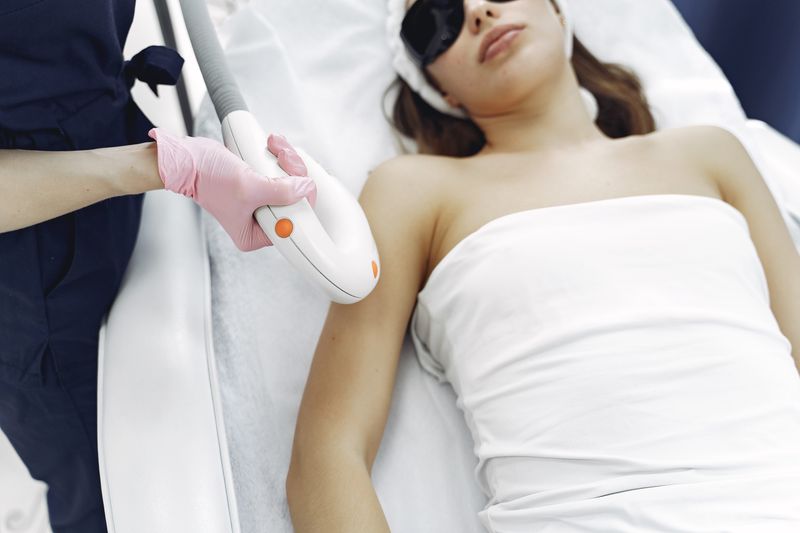
1. How Laser Hair Removal Works
A laser fires a concentrated beam of light at skin that rides on the follicle's own pigment: melanin in the hair absorbs the light, converts it to heat, and the heat damages the follicle's regenerative cells so it stops producing that hair. The mechanism is why everything else follows. It also explains the growth-phase catch: each pulse only meaningfully hurts hairs in their anagen (active growth) phase, and at any moment only a fraction of hairs in an area are anagen. You cannot laser until every hair has cycled through growth — which is why the calendar, not the laser, runs this show.
2. The Wavelengths and What They Mean for You
| Laser type | Wavelength | Best for | Notes |
|---|---|---|---|
| Alexandrite | 755 nm | Light to medium skin, lighter hair | The classic "gold standard" for paler skin |
| Diode | 810 nm | Medium skin tones, large areas | Fast, deeply penetrating, versatile |
| Nd:YAG | 1064 nm | Darker and tanned skin | Longest wavelength, safest on melanin-rich skin |
| IPL (broadband) | Variable | Some home devices | Not a true laser; lower power, slower results |
In the New York market you'll see all three lasers plus IPL salon devices. The short decision rule: pale skin loves alexandrite, mid-tone skin loves diode, and darker skin should insist on Nd:YAG. A reputable office matches the device to your Fitzpatrick type before touching you with it — and adjusts fluence accordingly. A place running one laser on everyone is selling sessions, not outcomes.
3. Candidacy: The Hair-Color Ceiling
Here's the uncomfortable truth no brochure leads with: laser is a hair-pigment technology. Blonde, red, gray and white hairs contain too little melanin to absorb enough energy, so they survive treatment untouched — in them, laser is a slow-drip expense with nothing to show. The honest candidate checklist:
- Dark hair: yes to laser, regardless of body area.
- Light hair (blonde/red/white/gray): poor to no response; electrolysis is the permanent solution here (one follicle at a time, slower, real results).
- Hormonal or facial hair: treatable, but tends to re-engage; expect more sessions and maintenance, sometimes despite medical root-cause treatment.
- Skin tone: every tone treatable — the wavelength table above is your map, and Nd:YAG is the darker-skin key.
An honest consultation will tell you candidacy in five minutes. Time is a currency; don't spend four sessions' worth on the wrong hair.
4. Sessions and the Real Number
Plan for 6–8 sessions, 4–8 weeks apart, then yearly maintenance. Shorter spacing for facial hair (every 4–5 weeks), longer for legs and back (8 weeks). Timing isn't negotiable — it's the anagen-cycle math working by catch-up: each session eliminates the currently-growing hairs, and the next catches the ones that cycled up since. At the end of the series most areas hold at a major reduction of up to 70–90% in good candidates, with remaining hairs reduced to vellus-like fuzz. The words to expect are permanent reduction, not removal — under the FDA's own label. Yearly touch-ups matter: hormones and time recruit new follicles, and one maintenance session a year keeps you in the "almost nothing to manage" state.
5. What a Session Actually Feels Like
You'll shave the night before or the office will on site — waxing, plucking and electrolysis are banned for weeks beforehand because the laser needs the root present to kill it. The treatment itself is a rapid series of warm stings, classically described as a rubber band snapping against skin, with a cooling tip or cryo-spray on the device trading pain for chill; most modern devices cold the skin either before, during or after each pulse. Large areas like full legs run 30–60 minutes; underarms and bikini lines are 10–20. Numbing cream is available for sensitive zones and rarely needed for legs. Afterward, the treated skin goes red and hot-butt for a few hours to a day — and then something weird happens that every first-timer mistakes for failure.
6. The Weird Week: Falsely Regrowing Hair
Roughly 1–3 weeks after a session, treated hairs shed from the follicles — the "faked regrowth" that looks like the laser failed. It's the opposite: hair being pushed out as the follicle dies. If you shave or "tweeze them out" you're interrupting evidence of the work, not a failure. Session two and beyond get cleaner because fewer live follicles remain. Understanding that shed in advance is the difference between being a relaxed repeat-customer and a panicking refund-request — the shed is the success, wearing its costume.
7. Risks and the Mistakes People Actually Make
- Burns and pigment changes — the dark-skin/tanned-skin + wrong-laser story from section 3.
- Paradoxical hypertrichosis — laser causing more and finer hair in a treated area; uncommon, more likely in certain hormonal settings and light-hair cases worth discussing.
- Folliculitis and ingrowns — the reason hygiene, loose clothing and no aggressive exfoliation matter post-treatment.
- Inadequate eye protection — legit providers shield the face entirely around the eyes; the laser must never be pulsed on the orbital region, and "permanent reduction" around the eyebrows is not a thing to DIY.
8. Provider, Device, and the Wellness Menu
In the NY/NJ market the prices span dramatically for the same result — which is why we publish the laser hair removal cost guide and why our free surgeon and clinic comparison exists. Choose a medical office (dermatologist or physician-supervised practice) for face-and-dark-skin work and machines whose model they can state out loud; a full aftercare map lives in the laser hair removal aftercare guide, and the whole self-care toolkit — resurfacing, peels, microneedling — is compared across the wellness library and the wellness services menu.
FAQ — Quick Answers
How does it work? Laser heat destroys the hair-forming follicle; only growing hairs respond, so sessions are spaced to catch the cycle.
Good candidate? Dark hair + light skin is ideal; darker skin needs Nd:YAG and experience; blonde/red/white hair — no.
Sessions? 6–8 spaced 4–8 weeks, then annual maintenance.
Permanent? Permanent reduction — typically up to 70–90% thinner/absent in good candidates, not guaranteed zero.
All skin types? Yes with the right wavelength and provider; the device match is the entire game.
Areas? Legs, underarms, Brazilian/bikini, back, chest, face (never the orbit).