Laser hair removal recovery is the shortest, quietest recovery in aesthetics — and precisely because it feels like nothing went wrong, most patients do the one thing that quietly ruins results: they treat the window as over before it is. The healing story is only six weeks long, but it has a memory: what you do to the skin (and the sun) in the first couple of weeks decides how much pigment and how little hair you're left with.
The honest calendar: hours of sunburn-feel, days of redness and follicle bumps, a 1–3 week shedding phase that every first-timer misreads as failure, and a sun-safety rule that outlives the session by weeks. Here's the whole map, plus the exact warning signs that deserve a dermatologist's phone call rather than a Google.
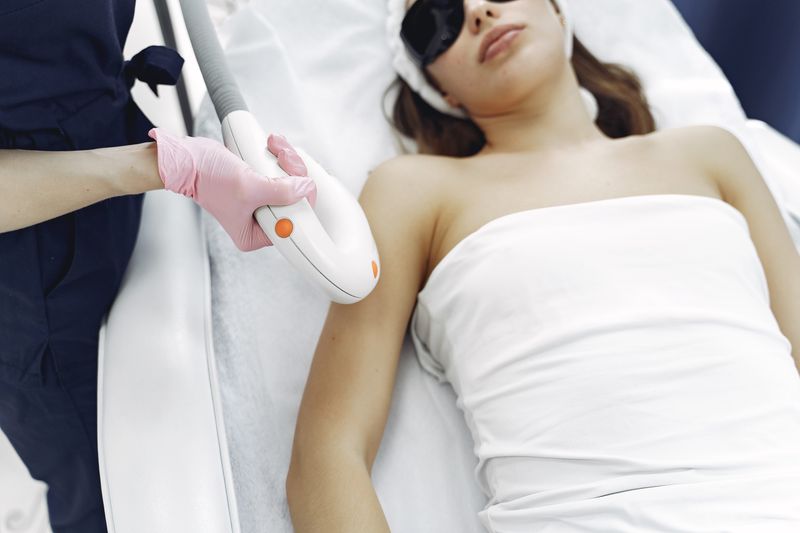
1. The First 24 Hours: Sunburn-Feel
Right after treatment the area looks and feels like a light sunburn — warm, pink, slightly tender — and it lobs a salute for a few hours before settling. That's the laser's heat finishing its follicle work as the skin vasodilates. Expect occasional tiny red dots at the follicle mouths (the "goosebump" look); they flatten over a day. For most areas you can shower and go about your calendar immediately — cool water, no aggressive movement. If a session was long or the settings high (large zones, dense hair), treat yourself like you shouted at the beach: light, breathable clothing, hydration, and patience.
2. Days 1–7: The Quiet Windows
The next week is about three choices, all small, all loading: heat and sweat — skip the sauna, steam room, hot yoga and the hard-gym session for the standard 24–48 hour window (your clinic's exact number wins); friction — loose clothing over still-red skin beats tight spandex; and product discipline — no heavy exfoliation, no aggressive chemical anything on treated skin until it has fully settled. Shaving is allowed and expected in the coming phase; waxing and plucking are banned until your clinician clears you, because they rip out exactly the follicles your money just invested in.
3. Weeks 1–3: The Shedding Scare
Then the phase that panics every first-timer arrives: roughly 1–3 weeks post-session, treated hairs surface and shed — poked out by the dying follicle like loose grass in a lawn. It reads as "the laser didn't work; all the hair is back." It is the opposite: it's the destroyed hair leaving the building, and it signifies the follicle is done. The evidence of death exits over days to a couple of weeks; shave freely while it happens, do not tweeze or fixate, and show up for session two on schedule so the next cycle of follicles meets the same fate.
4. Session Spacing: The Calendar Is the Treatment
Hairs grow in cycles — active anagen growth, transition, and rest — and the laser only reliably damages active hairs. Your office spaces sessions 4–6 weeks apart on the face (fast-cycling hormonal zones) and 6–8 weeks on legs, back and large areas precisely so newly awakened hairs step into the beam. Miss windows and you're not late — you're resetting the effect, because follicles left in growth phase will mature and cling. Treat the appointment itself as a treatment variable: 6–8 sessions kept honestly on the calendar complete the job the discount only promised.
5. Sun and Pigment: The Longest Rule
Of everything in aftercare, this is the one to haul with you for weeks: treated skin is temporarily more prone to pigment change, and sun exposure can both stain the healing skin and blunt the hair-reduction effect. Sunscreen SPF 30+ belongs on every treated area starting immediately and continuing for weeks after each session — including the arm and leg skin you assume is "covered by clothing." Tanning plans and the laser hair removal course genuinely compete; in the metro market the "winter course, summer smooth" rhythm exists for exactly this reason. The cost guide budgets the maintenance side of that rhythm; the technology guide explains why pigment matters on darker skin especially.
6. Aftercare Do's and Don'ts
| Do | Don't |
|---|---|
| Cool showers; loose, breathable clothing | Saunas, steam, hot yoga, hard-core cardio for 24–48 hours |
| Shave freely once cleared (and during shed) | Waxing, plucking or electrolysis between sessions |
| SPF 30+ on every treated area for weeks | Tanning beds, sunbathing, or skipping SPF on "covered" skin |
| Gentle hydration and bland moisturizer | Scrubs, exfoliators or harsh actives on treated skin |
| Keep the 4–8 week appointment calendar | Judging results before sessions 6–8 and 3 months |
7. Complications Watch
Five things justify a professional call during laser hair removal recovery: blistering or crusting (beyond tiny transient bumps), redness that deepens or spreads past the first day (folliculitis or heat reaction), persistent dark patches (pigment change — earlier treatment fixes more of it), unusual paling of treated skin, and pain that returns instead of fading. Individually rare; collectively, the reason to know your clinic's after-hours number before you need it. If anything on this list appears, don't "wait, it'll settle" your way through — pigment and follicle injuries are time-sensitive, and your provider is a phone call away, not a browser tab.
8. Long-Term Care and Re-Treatment
After the course, treat maintenance as a light habit: one yearly touch-up per area keeps hormones and new follicles in check, at roughly 10–20% of your original course cost. That's the honest "long-term" line in the wellness budget. Combined with year-round sunscreen, most patients hold their result for years — a quietly huge return on a fairly unglamorous set of sessions. The rest of the toolkit — resurfacing, peels, microneedling — is compared in the wellness library and wellness services.
FAQ — Quick Answers
What does skin look like? Sunburn-pink with possible follicle bumps for hours to a day; blistering or spreading redness is a call, not a wait.
When do hairs fall out? 1–3 weeks after each session — that's the proof of work, not regrowth.
Shower or exercise? Cool shower same day; heat, steam and hard sweat wait 24–48 hours per clinic protocol.
Sunscreen? Yes, SPF 30+ on every treated area for weeks — pigment outcome depends on it.
Gap between sessions? 4–6 weeks face, 6–8 weeks large areas — the calendar is the treatment.
Red dots? Usually transient follicular redness; persistent, oozing or spreading bumps need a clinician.