You searched "laser skin resurfacing cost new york," "co2 laser facial nj," or "fraxel cost" — and congratulations, you've stepped into the deep end of dermatology's most impressive and most oversold technology. Laser resurfacing can genuinely turn back the clock on wrinkles, scars and sun damage, and it can also cost you two weeks of social hibernation if you pick the wrong laser for the wrong skin. This guide is the map: which laser does what, who's a candidate, what the procedure feels like, and what "resurfaced" skin really costs and recovers like in New York and New Jersey.
Three sentences you need before anything else: ablative lasers (CO2, erbium) remove skin layers and deliver the most dramatic results with 7–14 days of downtime; non-ablative and fractional lasers (the Fraxel-style family) treat micro-columns of skin with a fraction of the downtime and a fraction of the drama; and the right choice depends on your skin type, your problem, and your calendar.
1. What Is Laser Skin Resurfacing?
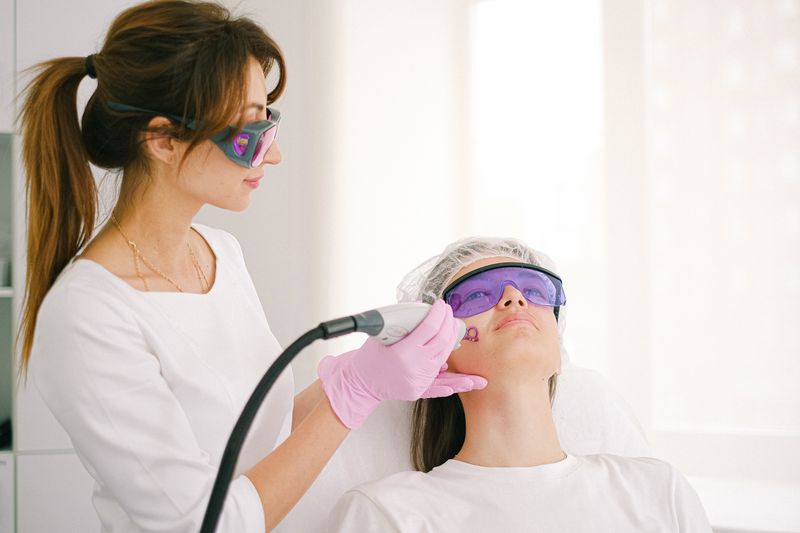
Laser skin resurfacing applies focused light energy to the skin to remove damaged surface tissue and stimulate new collagen. Imagine a very precise, very controlled "controlled injury" that your body answers with fresh skin: smoother texture, more even pigment, tighter pores, softened lines and flattened scars. The technology family splits into two philosophies — ablative (vaporize a layer, big recovery, big result) and non-ablative/fractional (heating micro-columns under an intact surface, tiny recovery, gradual result) — and the modern sweet spot for most patients lives somewhere between: fractional ablative, which treats the face in a grid rather than full-face.
2. Ablative vs Non-Ablative vs Fractional
| Category | How it works | Downtime | Result strength | Typical use |
|---|---|---|---|---|
| Ablative (CO2, erbium) | Vaporizes outer skin layers | 7–14 days, noticeably red | Highest — deep wrinkles, scars | One dramatic treatment |
| Fractional ablative | Grid of micro-ablated columns | 3–7 days, moderate redness | High, with faster healing | The modern "goldilocks" option |
| Fractional non-ablative | Heats columns below the surface | 1–3 days, mild pinkness | Moderate, needs a series | Tone, pores, mild scars, texture |
| Non-ablative (IPL-type) | Warms deeper layers only | Minutes to hours | Mild — build over sessions | Rosacea, spots, overall tone |
3. CO2 vs Erbium vs Fraxel: The Big Three
| Laser | Strength & depth | Best for | Downtime | Cost (NY/NJ) |
|---|---|---|---|---|
| CO2 (ablative) | Deepest, classic gold standard | Deep wrinkles, acne scars, severe sun damage | 7–14 days+ | $2,000–$5,000 |
| Erbium (ablative) | Fast-precision ablation, gentler than CO2 in experienced hands | Fine lines, moderate scars, surface pigmentation | 4–10 days | $1,500–$4,000 |
| Fraxel / fractional | Fractional micro-grids, non- or lightly-ablative | Tone, texture, pores, mild scars, stretch marks | 1–5 days per session | $500–$1,500/session |
Brand reality check: "Fraxel" is a specific device line (Solta), but "fractional resurfacing" is the general technique, and many practices run equivalent fractional lasers (e.g., Halo, PicoSure with fractionated tips, Clear + Brilliant). Always ask what device you're getting and whether it's ablative, non-ablative, or fractional — the price and downtime should match that answer.
4. What Resurfacing Treats (and What It Doesn't)
- Wrinkles: both fine lines and deeper forehead/eye wrinkles, most effectively with ablative or fractional-ablative wavelengths.
- Acne scars: deep icepick and boxcar scars improve most with ablative lasers; rolling scars respond to fractional plus subcision approaches. Real, but rarely 100% — patience and a series are honest.
- Sun damage & pigmentation: mottled brown spots, uneven tone and salmon-toned photodamage improve dramatically; darker skin types need careful wavelength and low-fluorophore energy settings.
- Texture & pores: fractional and non-ablative wavelengths refine surface texture better than anything in a bottle.
- What it won't do: fix sagging or jowls (that's a lift), or erase scars entirely — it resurfaces, it doesn't transplant.
5. Are You a Good Candidate?
Great candidates: healthy adults with realistic expectations, mild-to-moderate wrinkles or scars, sun damage they're tired of concealing, and — critical for New York — a solid two weeks of social downtime available for ablative work. Your Fitzpatrick skin type is genuinely decisive: lighter skin tolerates ablative CO2 with a lower risk of hyperpigmentation; darker skin needs fractional, erbium or non-ablative strategies to avoid blotchy results. Not now: active acne, active infections, pregnancy, sunburned skin, recent isotretinoin use, or a tendency to keloid scarring.
6. Your Consultation
Skip the place that quotes you a resurfacing price without examining you. A proper consult will: determine your skin type and sun history, photograph the face, name the actual device and wavelength, separate "complete treatment" from "per session," give you the real downtime in writing, and discuss hyperpigmentation risk honestly. In NY and NJ, who performs the laser matters — insist on a board-certified dermatologist or plastic surgeon for ablative resurfacing, and verify a medical laser permit/license for the practice.
7. The Treatment, Step by Step
- Prep: stop retinoids, certain acne drugs and sun exposure 1–6 weeks ahead per your clinician's list; antiviral medication is often prescribed before ablative CO2 to prevent cold-sore flaring.
- Numb & protect: topical anesthetic plus nerve blocks, sometimes light sedation for full-face ablative; eyes get steel shields.
- The pass: the clinician scans the laser across the treated area — a snapping sensation for ablative, a pulse of heat for fractional — typically 15–45 minutes depending on area.
- The aftermath: cooling, a healing ointment, and for ablative work often a full-length bandage-like "occlusive" dressing for the first day or two. Then the peeling stage begins.
8. How Many Sessions?
Ablative resurfacing: one thorough treatment is the norm, with a possible smaller follow-up at 6–12 months. Fractional and non-ablative resurfacing: plan on a series — typically 3–5 sessions spaced 3–6 weeks apart for tone, texture and scars, then maintenance every 6–12 months. Practices often price fractional series as packages, which is the math our resurfacing cost guide unpacks in detail.
9. Results, Risks and Side Effects
Results build over weeks to months as collagen remodels — the best "after" is usually at 3–6 months, not day five. Risks are real and must be discussed honestly:
- Expected: redness (mild in non-ablative, vivid and prolonged in ablative), peeling, swelling, stinging, sunburn-feel, sensitivity.
- Common: temporary hyperpigmentation or hypopigmentation — darker skin types carry the highest risk; prolonged redness lasting weeks; acne-like flare-ups; milia.
- Rare but real: infection, scarring, permanent pigment change, cold-sore outbreaks (prevented with antivirals), and — for ablative work in untrained hands — burns and textural damage. This is the crowd-pleaser reason not to buy resurfacing from a discount storefront.
Post-treatment truth, if anything: the recovery experience is the deciding factor for most patients, so we double down on it in our laser resurfacing recovery guide.
10. What It Costs
Budget this way: $500–$1,500 per fractional or non-ablative session, $1,500–$4,000 for erbium, and $2,000–$5,000 for full-face CO2 ablative resurfacing — with NYC operating at the top of every band and New Jersey suburban practices often 20–30% lower. The complete national, NY and NJ breakdown, package economics and insurance reality is our laser resurfacing cost guide. Compare it with chemical peels and microneedling across the wellness library, or browse the full program on our wellness services page.
FAQ — Quick Answers
What is laser skin resurfacing? Using light energy to shed damaged skin and rebuild collagen — effective for wrinkles, scars, sun damage and tone.
CO2, erbium or Fraxel? CO2 for deep drama (long downtime), erbium for precision results, fractional for a gentler series. The right pick depends on your skin and calendar.
Does it hurt? The treatment is numbed; ablative recovery is a multi-day sunburn-feel, non-ablative is a few hours of warmth.
How much downtime? 1–3 days for non-ablative/fractional, 7–14 days (plus weeks of residual pink) for ablative. Plan social downtime.
Will it fix my scars/wrinkles? Improves — often dramatically — but rarely eliminates. Deep scars and tone need realistic expectations and often a series.