Lips are the smallest facial feature with the loudest opinions attached to them. Some patients resent thin lips their whole lives; others watch volume go quietly south through their 30s, 40s and 50s and want it back — without ending up wearing the "done" look. You searched "lip filler NYC," "lip augmentation cost" or "lip lift," so let us give you the full, honest map of the territory.
This 2026 guide explains hyaluronic acid fillers (the standard), surgical lip lift (the permanent option most people never learn about), the Botox lip flip (the cheap audition), how each technique is actually performed, what results last for, the real risks including the rare emergency everyone should know, and New York and New Jersey price contexts. Money and downtime get their own deep dives in the cost guide and the aftercare guide; every guide is on our blog index.
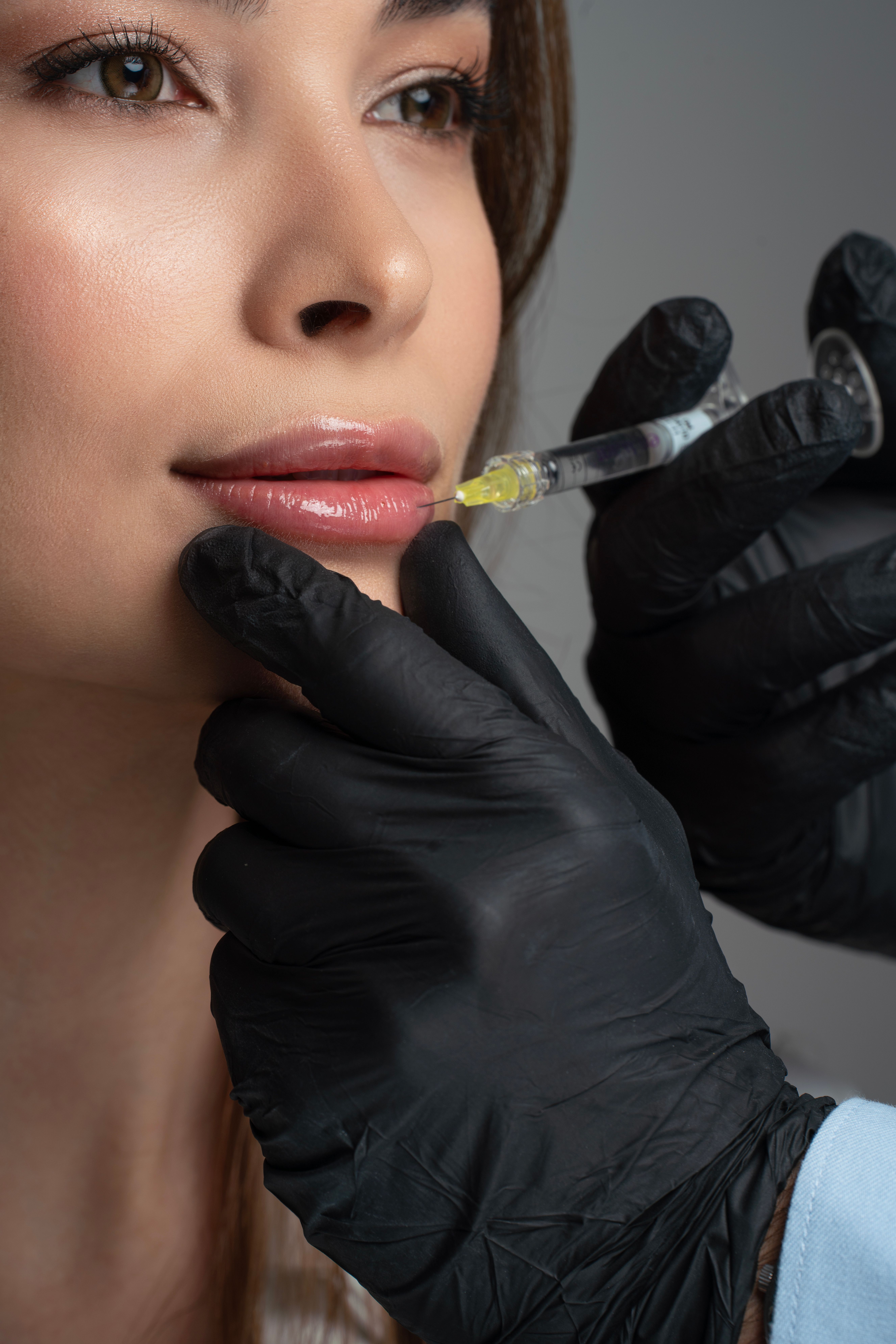
1. What Is Lip Augmentation?
Lip augmentation is the umbrella term for changing lip shape, size, projection or positioning. In 2026 it means three distinct things:
- Hyaluronic acid (HA) filler — the world's standard. Gels of cross-linked hyaluronic acid (Juvederm Ultra, Volbella, Vollure; Restylane Kysse, Silk; Belotero among others) are injected into the lip body, vermilion border and philtral columns for 15–30 minutes. Results are instant and reversible with hyaluronidase, and because HA is naturally present in the body, safety records are excellent.
- Surgical lip lift — the permanent answer: a small incision hidden under the nose removes a thin strip of skin, rotating the upper lip upward. It shortens a long philtrum, increases visible pink and tooth show at rest, and cannot migrate or be overfilled — but it is surgery, with a small scar and a slightly numb lip. General range $2,000–$6,000 and up for combined work.
- Botox lip flip — a subtle, temporary trick: a few units above the lip relax the muscle so the upper lip rolls outward when you smile. Lasts two to three months, costs little, changes little. Perfect as a test run.
Because the lips sit center-stage of the face's expressive machinery, the surgical world now treats volume plus position as one project — many patients pair filler with a lip lift, and perioral work frequently joins a facelift or eyelid surgery plan. Review the full face menu before you commit to a single feature.
2. Who Is an Ideal Candidate?
- Thin lips from birth — filler builds the classic shape-and-projection profile.
- Age-related volume loss — lips deflate and the vermilion border fades; filler or a lift restores the youthful reading.
- Vertical lip lines and border feathering — fillers can smooth the texture; resurfacing helps the lines themselves.
- A long upper lip and 'flat' smile — the situation filler often cannot fix: as the upper lip stretches with age, tooth show vanishes and the lip seems to disappear. That is the lip lift's signature patient profile.
- Healthy skin, manageable expectations, and a plan — you want enhancement, not a signature look, and you understand that lips move, kiss, eat and animate 12 hours a day.
Exercise caution if you have active cold sores (filler can trigger an outbreak; preventive antivirals are common practice), known allergies to lidocaine or HA, untreated medical conditions your injector should know about, or a belief that "more is more" — the surgical community's number-one counseling task in lips is restraint.
3. The Consultation: Filler, Lift, or Flip?
A serious lip consultation measures you, photographs you, and — crucially — watches your mouth move. The deciding questions:
- What is your philtrum length? A long philtrum plus disappearing tooth show says lip lift; short lips plus good tooth show say filler.
- What is your upper lip-to-lower lip ratio? The aesthetic target is roughly 1:1.6 (upper:lower). Most dissatisfaction is a ratio problem, not a pure volume problem.
- Volume or shape? Doughnut-fullness needs filler for projection and a softer cupid's bow; sharp, defined borders need precise border work; a gummy happy grin is Botox territory.
- How permanent do you want this? Filler: 6–12 months, reversible. Lift: years, permanent-planning required.
- Full-face considerations. Empty midface hollows starve the lips' setting — many surgeons mention fat grafting or a facelift for the total picture.
- Budget and downtime. Numbers and aftercare are itemized in the cost guide and recovery guide.
4. How Filler Is Performed, Step by Step
- Prep: topical numbing cream sits 10–20 minutes; a dental-style anesthetic block or injectable numbing marginalizes pain. Ice and chill-tip applicators further calm the sting.
- Planning: your injector marks the ideal vermilion border, cupid's bow and philtral crests while you sit upright.
- Injection technique: the gel is placed in small retrograde passes — along the border and into the wet-dry line with fine cannulas or needles, then strategically into the body and column areas. The classic Russian and border-definition styles emphasize the cupid's bow and border with a less full body; the fuller, projection-led look uses deeper body placement. Placement decides aesthetics more than product brand.
- Molding: gentle manual shaping balances the result; you review and can adjust in the chair.
- Follow-up: a two-to-four-week review is standard; a fourth to half syringe touch-up tunes peaks. The whole appointment is 15–30 minutes.
Product choice is real but narrower than marketing implies. Volbella and Silk are softer; Restylane Kysse and Juvederm Ultra are built for lip projection and durability; all are hyaluronic acid and all can be dissolved. Your injector's candy-rotation of "Volbella for softness, UltraXc for firmness" reflects skill differences more than science.
5. Techniques Compared: Filler, Lift, Flip, Transfer
| Technique | How it works | Duration | Permanent? | Best for |
|---|---|---|---|---|
| HA lip filler | Injected gel builds volume, shape, border | 6–12 months | No; reversible | Thin lips, volume loss, shape tuning |
| Surgical lip lift (subnasal) | Skin strip removed under nose; upper lip rotates up | Years | Yes | Long philtrum, lost tooth show, thin smile |
| Corner lip lift | Small incisions at mouth corners lift downturn | Years | Yes | Downward, sad mouth corners |
| Botox lip flip | Relaxes the upper-lip muscle for a rolled-out smile | 2–3 months | No | Subtle upper-lip announcement; test-drive |
| Fat transfer to lips | Your fat injected for volume | Variable; partially lasting | Partial | When you want natural volume and have donor fat |
6. Results and Longevity
Filler results are instant, then settle — swelling doubles-and-halves in the first 48 hours, and the "final" reading appears at two to four weeks once every droplet finds its place and any asymmetry washes out. Duration runs six to twelve months for most products, with thinner gels on the short end and robust formulas nearer the year mark. Concentration: repeated patients often find subsequent treatments stretch out as continued maintenance, and a well-planned first result uses restraint rather than a syringe-permanent commitment.
A lip lift result is permanent and behaves differently: the new tooth show and shorter philtrum are visible once swelling (about one to two weeks) settles, the subnasal scar matures by three to six months, and the lift reliably "reads" on a face for the long haul — one reason it has quietly become a surgical favorite for patients who have cycled filler for years. Many patients combine the lift with a first-time filler for immediate volume while the lift heals.
7. Risks, Side Effects and the Emergency Everyone Should Know
- Routine: swelling (peak day 1–2), bruising, tenderness, a firm or numb patch — all settle in one to two weeks. Ice, arnica and time are the tools; don't panic-pat.
- Common enough to care: asymmetry (often correctable with a tiny adjustment or dissolution), lumps (usually dissolving; massage per protocol), migration and a bluish sheen over the border (the Tyndall effect when gel is too superficial).
- Overfilling — the "duck lip" outcome — is a planning failure, not a bad patient. The fix is hyaluronidase and patience.
- The rare emergency: vascular occlusion, where filler blocks a branch of the labial artery. Warning signs appear within minutes-to-hours: a patch turning white, mottled, dusky or blue-gray plus pain out of proportion and sometimes tingling. This needs immediate hyaluronidase by your injector and sometimes hospital care to protect the lip. Ask your injector their after-hours protocol for this before you get injected.
- Lip lift surgery risks: the same family as other face work — a small subnasal scar, numbness of the upper lip, asymmetry, and rare wound issues. A well-healed lift scar is invisible within months to most people; a poor one is why talent matters.
8. Cost and Next Steps
Fillers run $500–$1,800 per syringe (New York City at the upper end), typical treatments one to two syringes; a permanent lip lift generally costs $2,000–$6,000+ with surgeon, anesthesia and facility lines. Both get the full New York and New Jersey treatment in the lip augmentation cost guide. Aftercare for each route — filler management versus lift incision care — is in the recovery guide. If silicone-adjacent tissue worries you, our lip silicone removal guide covers the reversal side of that story.
FAQ
How much do lip fillers cost in New York? A single syringe of hyaluronic acid filler (Juvederm, Restylane, Kysse, Volbella) runs about $500 to $1,800 depending on the product and practice, with New York City prices usually at the upper end. Most patients use one to two syringes, so a typical NYC treatment totals $900 to $3,200 before touch-ups.
How long do lip fillers last? Hyaluronic acid lip fillers typically last six to twelve months, with thinner volumizing products on the shorter end and more robust cross-linked fillers on the longer end. Subsequent treatments last progressively longer because the body's maintenance slows with repeated volume. Dissolving the result is always possible with hyaluronidase.
What is the difference between lip filler and a lip lift? Lip filler adds volume and shape with injectable hyaluronic acid; it lasts six to twelve months and is completely reversible. A lip lift is permanent surgery that shortens a long upper lip by removing a strip of skin under the nose, rotating the lip upward for more visible pink, a shorter philtrum and more tooth show at rest. Important choices are longevity, scar and anatomy.
Does lip filler hurt? Discomfort is brief and mostly psychological: modern protocols use topical numbing plus dental anesthetic blocks so most people feel pressure and a few pokes rather than real pain. The full appointment runs 15 to 30 minutes, swelling peaks in a day or two, and ice, not painkillers, saves the discomfort. Chill-tip applicators cut stinging further.
What are the risks of lip fillers? Swelling, bruising and tenderness are routine and resolve in one to two weeks. Less common issues include asymmetry, lumps, migration, overfilling (the duck lip result) and the Tyndall effect, where over-placement makes the lip look blue-gray. The rare but serious risk is vascular occlusion to the facial artery; warning signs are immediate whitening, mottling, severe pain or coldness, which require emergency hyaluronidase treatment.
Should I get my lips done with filler or a Botox lip flip? Filler adds real volume; a lip flip merely relaxes the muscle so your upper lip rolls outward a touch more when you smile, creating the illusion of slightly fuller lips without adding size. The flip is subtle, lasts two to three months, costs one to two hundred dollars, and disappears quickly if you dislike it — an ideal test-drive before committing to filler.