Searching "revision rhinoplasty," "secondary rhinoplasty," or "failed nose job" carries a very particular feeling — disappointment, hope, and a lot of uncertainty. But here's the encouraging truth, delivered straight: revision rhinoplasty is one of the most technically sophisticated fields in facial plastic surgery, and excellent surgeons do turn complicated first results into outcomes patients love. It's also harder, more expensive and slower to heal than a primary nose job — and knowing that is the first step to a good decision.
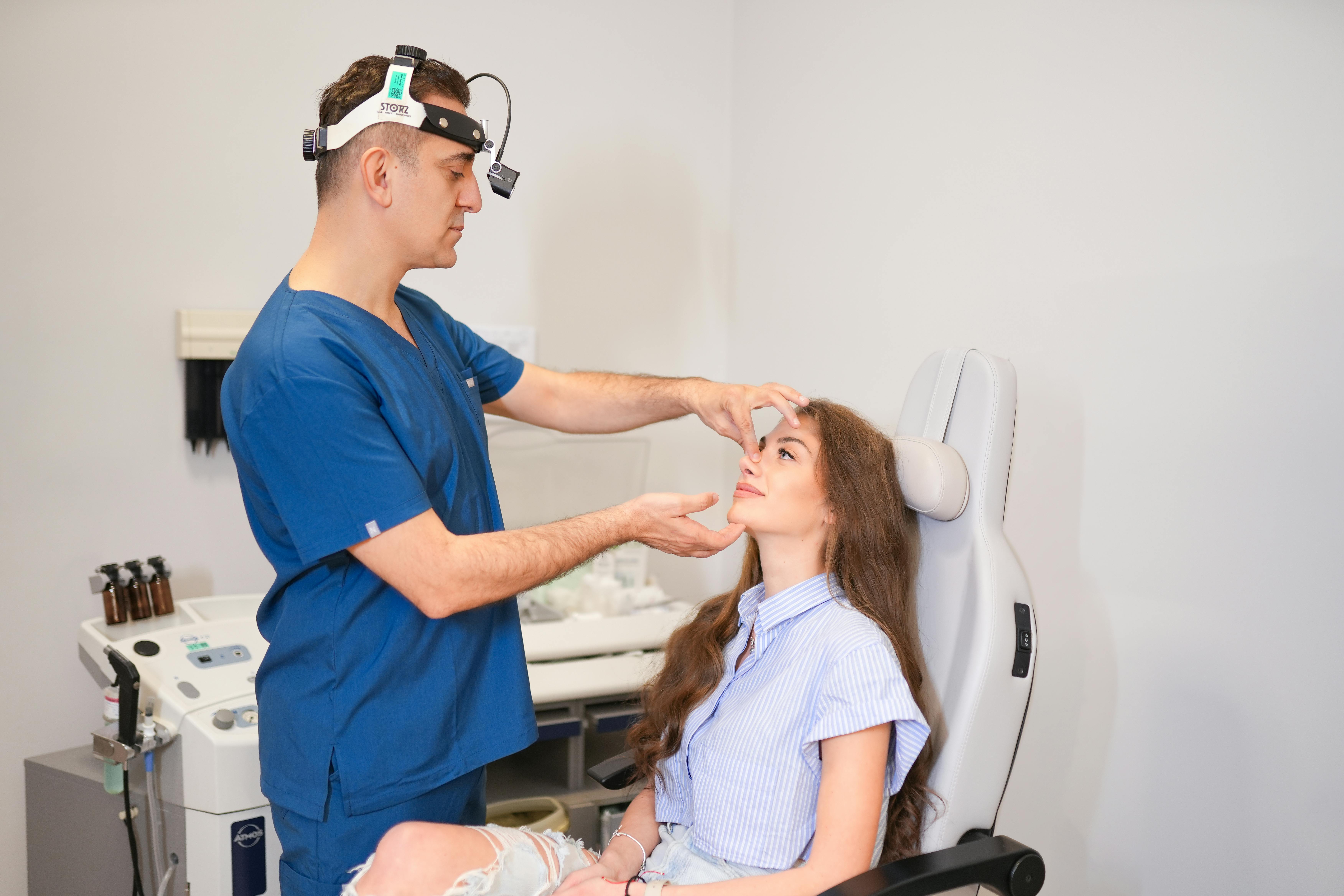
1. When Is Revision Rhinoplasty Needed?
Revision rates after primary rhinoplasty are commonly cited at roughly 5–10%, but that sweeps a broad range — complexity raises the odds, and in some high-risk groups (thick skin, prior trauma, ethnic augmentation) it's higher. Reasons patients seek a second operation:
- Aesthetic concerns: persistent asymmetry, dorsal irregularities or a bump that returned, a tip that looks over-rotated, pinched, or unresolved.
- Over-reduction: too much structure removed, leaving a scooped, Pollybeak or collapsed look.
- Functional problems: new or unresolved breathing obstruction, valve collapse, septal issues.
- Contour issues: graft visibility, palpable edges, or skin retraction.
- Combined problems: the common real-world scenario — both looks and breathing are off.
Before concluding revision is necessary, one caution: primary nasal swelling resolves for a full year. If you're 6 months out and worried, the answer is often patience, not another surgery. Most surgeons won't consider revision until the nose has finished its first-year evolution anyway.
2. Timing: The 12-Month Rule
Operating on a nose that is still healing is operating on a moving target. Standard practice:
- Wait at least 12 months after the primary surgery.
- Allow scar tissue to mature and swelling to fully resolve.
- Then reassess with fresh photos and an objective surgeon's eye.
- Functional-only revision may occasionally be considered sooner if breathing obstruction is severe, but even that is weighed carefully.
Rushing a revision is the classic path to needing a third surgery.
3. Why Revision Is Genuinely Harder
Revision is not "just another rhinoplasty." Three things make it fundamentally more complex:
- Scar tissue: The prior surgery created internal scarring that distorts anatomy and makes dissection riskier.
- Depleted cartilage: Septal cartilage may already be partially harvested or weakened — which is why grafts increasingly come from the ear or rib.
- Altered framework: You're not reshaping native anatomy; you're reconstructing a structure that was already modified — and possibly over-resected.
The operative approach for revisions is accordingly different: nearly always open, with the surgeon focused on structural rebuilding with grafts (septal, ear or rib cartilage) rather than simple refinement.
4. Cartilage Grafts in Revision
| Graft source | When it's used | Trade-offs |
|---|---|---|
| Septal cartilage | Preferred first choice when available | Same surgical field; no donor scar — but often limited after prior surgery |
| Ear (conchal) cartilage | Reserve support, tip work | Small amount; hidden donor site in the ear crease |
| Rib (costal) cartilage | Major structural rebuilding, dorsal replacement, septal replacement | Large strong supply; adds a small chest scar and longer surgery |
| Cadaveric (allograft) options | Cases where autologous supply is exhausted | Longer resorption questions; used selectively by experienced surgeons |
Your surgeon will select the donor based on how much structure must be rebuilt and what remains available. Rib grafting is the workhorse of serious revision work.
5. What the Surgery Involves
A revision case typically includes:
- Open approach for full visualization.
- Careful scar-tissue release to free the framework.
- Graft harvest (septal, ear and/or rib) as planned.
- Structural reconstruction: columellar struts, tip grafts, dorsal onlays, spreader grafts to open airways, alar batten grafts to support collapsed valves.
- Functional repair where breathing is the issue.
- Splint/cast applied; duration typically 7–10 days.
- Operative time: usually longer than primary — often 3 to 4+ hours.
6. More Swelling, Longer Road
Revision recovery stacks the usual rhinoplasty arc with extra swelling and a longer tail:
- Week 1: splint on; bruising and swelling peak.
- Week 2–4: bruising fades; desk work possible.
- Month 1–3: 70–80% of result; swelling persists tangibly.
- Month 6–12 (often longer): definition continues to emerge.
Plan around a full year before judging the result. Revisions with rib grafting can take even longer to settle. Week-by-week detail is in our revision recovery guide.
7. Cost & Insurance Reality
Because complexity, graft needs and operative time all climb, so does price. NY/NJ revision cases typically run $9,000 – $25,000+. The functional portion may draw insurance coverage when breathing obstruction is documented — details in our revision cost guide.
8. Choosing a Revision Specialist
This is the single most important decision in this entire process. A surgeon who is excellent at primary rhinoplasty is not automatically excellent at revision:
- Ask about revision volume: How many revisions per year? What share of their practice is revision?
- Demand revision-specific results: before-and-after galleries of revision patients, not primary-only work.
- Obtain prior operative notes and share them — a good revision surgeon studies what was done before.
- Get an honest assessment of risk: be wary of guarantees; experience shows itself in candor.
- Ask about rib-graft experience specifically if major reconstruction is likely.
- Feel the communication: for revision work, trust in the surgeon is half the battle.
FAQ
When can I have revision rhinoplasty? At least 12 months after your primary operation, sometimes longer for complex cases.
Is revision harder than primary? Yes — scar tissue, depleted cartilage and altered anatomy make it more demanding and less predictable.
What grafts will I need? Commonly septal, ear and/or rib cartilage depending on the reconstruction required.
Is recovery longer? Usually — expectations should stretch toward a full year or more for final results.
Does insurance help? Cosmetic revision, no; documented functional correction, possibly — ask for a prior-authorization review.